B2B Video Production in Houston: A Guide for Technical Companies...
Table of Contents
ToggleThe Event & Conference Video Playbook: How to Turn One Live Event Into Months of High-Impact Marketing Content

Mark Wonderlin
CEO and Filmmaker, Mosaic Media Films
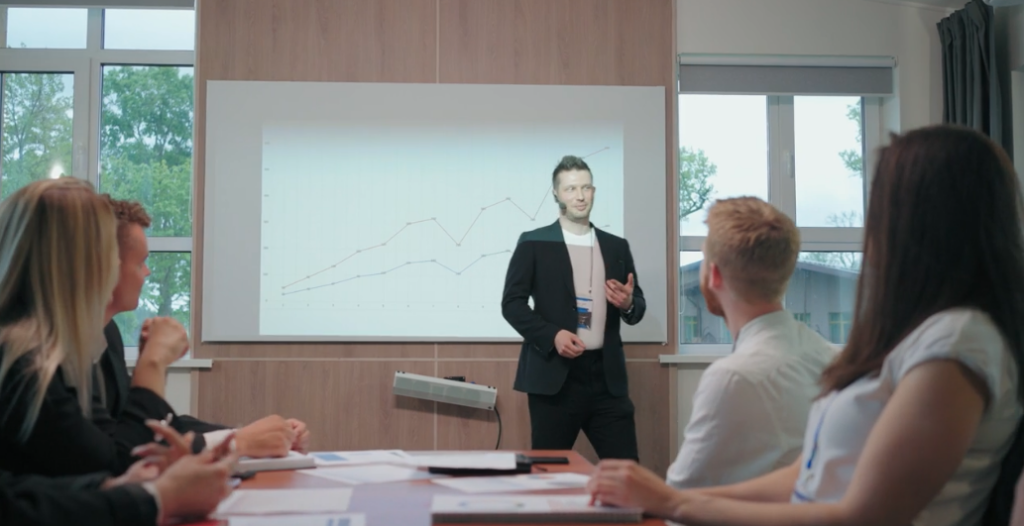
Most companies treat event video the same way they treat event catering: it’s something you hire for the day. The crew shows up, captures some footage, delivers a highlight reel, and everyone moves on. A few days later, that recap gets posted to LinkedIn, shared internally, and then quietly disappears into a forgotten folder on a hard drive.
For an initiative that required months of planning, thousands of dollars, and significant staff time, that is an incredibly small return.
In 2026, the truth is that a live event isn’t just a moment—it’s a content goldmine. Inside a single conference, trade show, or summit, you have experts speaking, customers networking, and leadership presenting a vision. If you capture this strategically, one day of filming can fuel your entire marketing engine for the next six months.
At Mosaic Media Films, we see the biggest wins not from the recap video itself, but from the “Long-Tail” of repurposed assets. When you shift your mindset from a “one-time production” to a “content engine,” the ROI of your event compounds.
Why the Standard “Sizzle Reel” Underperforms
The classic two-minute event sizzle reel isn’t wrong; it’s just incomplete. While it’s great for showing energy and excitement, it rarely drives measurable business outcomes on its own. It’s a “vanity asset” that looks fun but doesn’t necessarily educate, build authority, or convert prospects.
The problem is that most marketing teams only ask one question: “Can we get a recap?” They don’t ask: “How can we turn this event into twenty useful pieces of content?”
When you only plan for one deliverable, you only get one. But when you plan for a library, every speaker and conversation becomes a strategic opportunity. This is how Texas businesses turn events from expenses into high-yielding investments.
Thinking Like a Content Producer: The Strategy Phase
The difference between average and high-performing event video strategy is intention. Showing up and “grabbing whatever looks cool” results in random footage. Showing up with a plan tied to specific business goals results in assets that move the needle.
Before the first camera is turned on, we recommend identifying what the event needs to accomplish after the doors close. Are you:
- Generating top-of-funnel leads?
- Attracting future event sponsors?
- Recruiting top-tier talent?
- Building thought leadership for your executives?
Once you define the outcomes, you can reverse-engineer the shoot. This is where thoughtful planning makes the difference. Instead of reacting to the event, you are capturing with a specific post-production roadmap.
The Core Videos Every Event Should Produce
A polished event highlight reel still matters for social proof, but a robust event video strategy includes several other high-value formats.
Keynote and Session Breakouts
Great talks shouldn’t disappear once the audience leaves. Recorded properly, a single 30-minute keynote can be sliced into ten “insight clips” for LinkedIn, providing a steady stream of expert content for months.
On-Site Interviews and Testimonials
Taking five minutes with a speaker or an attendee can produce authentic testimonials that feel far more natural than a staged office interview. These provide the social proof needed for sales and recruitment.
Behind-the-Scenes & Culture Footage
Candid shots of your team collaborating or setting up the event humanize your brand. It shows the “human horsepower” behind the corporation, which is a powerful magnet for recruiting.
Turning One Day Into Dozens of High-Impact Assets
Through smart filming and professional editing, one well-covered day can yield a massive library of deliverables:
- A cinematic “Sizzle Reel” for your website.
- “Thought Leadership” clips for executive social pages.
- Recruiting snippets for Glassdoor and LinkedIn.
- Vertical “TikTok/Reels” style content for mobile engagement.
- Sponsor “Thank You” highlights to secure future funding.
This is the essence of video marketing efficiency. Instead of creating content from scratch later, you are simply mining the raw material you already captured at the event.
Why This Is a Competitive Advantage for B2B Brands
In industries like healthcare, manufacturing, and tech, events are often the only time your entire ecosystem—leaders, partners, and prospects—is in the same room. This provides instant credibility. When a prospect sees a video of a room full of engaged attendees, it signals that your brand is the “authority” in that space.
That level of social proof is almost impossible to manufacture in an office. But events provide it naturally; you just have to document it.
Making Your Event Work Harder for Your Business
You are already investing the capital to host or attend these events. The question isn’t whether you should film it—it’s whether you’re maximizing what you film. When approached strategically, a single event becomes a content pipeline that fuels your marketing, sales, and HR departments for the rest of the year.
If you want to turn your next conference into a content engine, explore our resources or contact us to start planning your strategy.
Your Competitors Are Already Filming. Are You?
Visual authority is the primary currency today. If your digital presence feels like it’s stuck in 2022, you are signaling a lack of innovation, trust, and differentiation. Join the ranks of Austin, Dallas, San Antonio, and Houston’s leaders who are using our approach to cinematic storytelling to win more bids and attract better talent.
The first step is a 20-minute strategy call – CLICK HERE TO SCHEDULE NOW
Common questions
Everything DFW wellness leaders ask us.
The questions that come up most on our strategy calls with longevity clinic founders, executive health teams, and biohacking brands.
How long after the event should we release the highlight reel?
Ideally, within 48 to 72 hours. Momentum is highest immediately following the event. A “fast-turnaround” reel keeps your brand at the top of the conversation while attendees are still talking about their experience.
Do we need a separate crew for interviews and b-roll?
For larger conferences, a two-person crew is recommended—one to focus on “The Energy” (b-roll/highlights) and one to manage “The Voice” (dedicated interviews). This ensures no major keynote moments are missed while someone is being interviewed.
Is it worth recording full-length sessions if we only want social clips?
Yes. You should always record the “Full Stack.” It is much easier to cut a 30-minute high-quality recording into ten 60-second clips than it is to try and “grab” a social clip in the moment without the full context.
How do we get attendees to agree to on-camera testimonials?
We recommend a “low-friction” setup. Don’t pull them into a dark room with heavy lights. A mobile, professional rig in the networking area feels less intimidating and results in much more authentic, relaxed responses.
Can this footage be used for recruiting?
Absolutely. In fact, event footage is some of the best recruiting material you can have. It shows potential hires that your company is active, innovative, and influential in the industry.